1 / 29 / 2023

РУССКИЙ  МИР
ROSYJSKI ŚWIAT      RUSSIAN WORLD

Larisa Yakubowa

--„Ruski mir”. Putin stworzył potwora i spuścił go ze smyczy-- link do artykułu
Igor Isajew dla Wirtualnej Polski – wywiad z Larisą Jakubową

--"Russian Mir".
Putin created a monster and unleashed it--*
Igor Isaev for Wirtualna Polska – an interview with Larisa Yakubowa

The vast majority of people see "Russian mir" only in the category of ideology, politics or geopolitics. In fact, the danger and strength of this product lies in the fact that it has gone far beyond these limits and is a part of modern marketing - says Larisa Yakubowa in an interview with Wirtualna Polska. - The basis of "Russian mir" is an absolutely apocalyptic way of understanding the world, an alternative worldview, aimed at preventing existence in a normal world.


Since 2014, Larisa Yakubova, a historian from Donetsk and a member-correspondent of the Academy of Sciences of Ukraine, has been researching the "Russian world" (Russkiy mir). This is the Kremlin's concept that justifies the aggressive policy of conquering the neighbors. Jakubowa sees in the apologists of "Russian mir" a totalitarian sect that seeks to destroy the modern world. During her research, she predicted that Russia would attack Ukraine on a full scale. In an interview with Wirtualna Polska, she talks about how "Russian mir" is also dangerous for Poland.

Igor Isaev: Is "Russian mir" an exclusively Russian-speaking space?

Larisa Yakubova: No. It's a lie space. Total and comprehensive.

What is it?

Defining "Russian mir" is difficult because it is constantly changing. I've been studying it since 2014, but it appeared long before that date. If at the turn of the millennium the concept of "Russian mir" included one set of ideas and concepts, today it is a completely different substance. During these nine years, it went through several stages and changed a lot.

What were the stages?

"Russian mir" was formulated as a set of quasi-intellectual and spiritual concepts, which was first used as an element of Russian "soft power".

Its roots go back to the first Russian political emigration. I mean the one from the 1920s. But back then, they were the forerunners of the product we have today.

Are you talking about the fascist Ivan Ilyin who wrote about the supremacy of "Russian civilization"?

Yes, but among the others. This product was revived in 1998 when Russia declared insolvency and officially became bankrupt. It was not only an economic bankruptcy, but also an ideological and cultural one. It was a cross-cutting phenomenon.

Today's Russia is a country that appeared in this form in 1991, although it seems to have been present in history for a long time. The then post-Soviet intellectuals and the contemporary Russian intellectuals set themselves the task of creating a modern national idea that will shape the country in the future.

The expression "Russian mir" was proposed by Gleb Pawlowski, the Kremlin's political technologist, although this phrase first appeared in a collection of works by the Soviet philosopher Mikhail Gefter.

…with whom Pawlowski had very close relations…

Yes, he was a student of Gefter.

Born in Odessa, Pawlowski seems to have a certain complex towards Ukraine, albeit hidden under a highly intellectual mask.

Gleb Pawlowski is a typical representative of the elite of Ukrainian origin. After arriving in Moscow and starting his career among the state elite, he tries with all his might to spread the idea that Ukrainians are the same Russians, sometimes worse and sometimes better. In this construction, "Russian mir" assumes that Ukrainians are equally well suited to building a great Russian statehood. And this invalidates Ukrainianness as such.

It is an identity that denies national origins and tries to adapt culturally to the metropolis. Pawlowski agrees to be a part of the imperial project and with all his might constructs a concept that allows people like him to realize themselves at the highest levels of public service. He presents himself as "the better kind of Russian", not some "gastarbeiter" (guest worker)who will work for five kopecks (a few cents)

Was it, then, that Russia's economic bankruptcy that revived imperial nostalgia?

Recall the classic saying of Putin, which he has been repeating since coming to power - "Russia has been brought to its knees." The beginning of his rule was a turning point in which Putin initiated the project of building a "great" Russia.

With the subsequent recovery of the economy, the Kremlin tried to create a new concept of the national idea, which was supposed to compensate the Russians for the feeling of "national humiliation" due to the dissolution of the Soviet Union. It was the time when the first Chechen war had already ended and the second was going on. At the same time, society still had an apocalyptic feeling that the newly established Russia in 1991 was being destroyed.

Putin's power, which has been massively consolidated, entrusted intellectuals with the task of developing a product that would mentally unite Russia and all post-Soviet Russians who no longer had a Soviet Union but did not feel proud to be creators of a new Russia.

You say "product". Do I understand correctly that this was primarily a product of political technology?

I would emphasize the initial stage, i.e. the end of the 1990s, when it was created by several teams of intellectuals and artists, including group of so-called methodologists (political technologists Piotr Szczedrowicki and Jefim Ostrowski).

However, already in 2004, it was an economic and political version of "Russian mir", and therefore a political technology. It was quickly picked up by the authorities, who saw the significant mobilization potential of this technology and treated it as the basis for the operation of state structures. At that time, the "Russian Mir" was understood as an element of mobilization not only of Russians within the country, but also of the mobilization of Russian diasporas around the world, in order to gather their energy, wealth, abilities, and influence on other countries.

At the time, it was a modern idea that sought to be global in the positive sense of the word. However, it already bore all the hallmarks of imperialism.

For example, what?

For example, the superiority of Russians and Russian language speakers in relation to other citizens of the former Soviet republics. This was particularly visible in the Baltic states, as well as in Ukraine, which from the beginning was referred to in "Russian Mir" as an integral part of Russia.

After the Orange Maidan in 2004, there was a sharp turn of the "Russian mir" - from moderate political technology to active counter-revolutionary action. The Kremlin saw the Ukrainian Maidan as a challenge to regimes like their own.

In Russia, the idea of a democratic revolution has become the number one irritant to the Kremlin. At that time, the most important goal of the "Russian mir" was to counteract "color revolutions", as it was called in the Kremlin.

Does counter-revolution in this case mean anti-Western attitude?

After 2004, the main task is no longer the development of Russia within the frame of the global world, but opposition to democratic and liberal changes in the Russian state. At this point, Putin controls the most important parts of the economy, the mass media, and politics goes into the hands of "collective Putin", that is, the entire extended Kremlin apparatus in Moscow and in the regions.

Russia's entry into a "victorious war" with Georgia in 2008, which skyrocketed the country's political ratings, showed the development of links between the so-called deep people and "collective Putin" [rus. "Glubinnyynarod", a term introduced by the Kremlin ideologue Vladislav Surkov, meaning the apathetic, but the essential mass of Russians - ed.].

Russia did not have the strength to develop and deepen the war with Georgia for many economic reasons. It has not been possible yet to bring the Russian mass consciousness to the state it became on February 24, 2022.

There were still living cells of the opposition, albeit bleeding deeply. There were charismatic opposition leaders who were able to persuade influential layers of society to protest the war. The entire economy was not yet in the hands of "collective Putin", and not all levers of political management were in his hands.

In addition, Georgia was not the place where the global war between Russia and the West was historically intended to take place. Such a role was assigned to Ukraine. In 2008, Russian society was not yet ready to play the role of a submissive and utterly pointless resource in the global war that it is now.

Why wasn't it ready then, and is it now?

Because "collective Putin" has implemented his conservative counter-revolution during those 20 years. It ended in 2020 with the adoption of a new Russian constitution that disproportionately extended the president's powers while eliminating checks and balances.

In addition, "belief in god" was written into the constitution, and the Russian language was called "the language of a state-building nation."

Yes, then it has not only been shown that the Constitution no longer existed, but it was also about "sealing" the colossal work done over those two decades. At that time, the Kremlin created a complete socio-economic base for starting a world war.

What base is this?

There is no middle class in Russia, which is the basis of independent political opinion. The middle class was simply not allowed to develop in Russia. Today, over 70 percent of Russia's population depends on the state budget, as during the era of Soviet totalitarianism. At the same time, this is not a social bottom, because each ruble of social benefit moves them out of the category of poor people to the category of people who have not yet plunged into poverty.

On the other hand, business in Russia are large state-owned corporations that engage in corruption in government procurement. Separately stand the oligarchs, who in fact are the "collective Putin" for managing financial flows.

It is a closed circle of chronic poverty for most of the society, and at the same time unjustified dependence on the state. This creates a new version of modern paternalism that is used in war.

The society has been led to the point where conscription for war, mobilization, for many becomes another "normal" life program developed by the authorities.

Have the Russians somehow become a "collective Putin" themselves, or are they victims of the system?

This is quite a complex and painful problem. We are dealing with the catastrophe of Russia, the catastrophe of its post-totalitarian transformation. After all, the transformation ended with the old Soviet version of totalitarianism being replaced by a new one. This return to totalitarianism would be impossible without the massive support of the population.

The "mass man" is the basis of totalitarian systems, it varies between 70-85 percent. society. When the government has an agreement with the "mass man", then terrible transformations take place.

On the ruins of the old state, neither a state nor a society is emerging, but something what I call a "state-society" - a new, sick political system. Paradoxically, democracy becomes the basis of totalitarianism, but only in the sense that the majority of society wants to participate in this new totalitarian system.

Such a desire was formed in Russia during the annexation of Crimea.

The so-called "Crimean consensus".

Russia has been in this great madness since 2014, consistently developing tools to influence mass consciousness. When Putin's popularity drops to 60-62 percent, as before the previous phase of the war in Ukraine, the Kremlin's military actions raise him again for a while to the coveted 80 percent.

Mass support consists of three elements. The first is the absolutely obsessed promoters of the conservative counter-revolution, such as Alexander Dugin, one of the ideologues of the "Russian mir".

The other is the contractors who, by the nature of their service, live only by the system. And the third, and at the same time the largest element, are "watniki", as the "deep people" are colloquially called. They kind of don’t want to die or kill, but they lack subjectivity, they are used to relying on the "majority opinion" that they will hear thanks to propaganda.

Although there is of course a stable 15% who, despite the mass exodus of certain categories of Russians, still oppose this policy.

What to do with this last group? Opinions on it are radically different.

Let us remember that the world has entered a period of long and very severe upheavals. Given the truly complex diagnosis of everything that happened in Russia, today the future of the world depends on the joint efforts of the world community. There are many future scenarios.

One option is that Putin's Russia will close its borders for seventy years, like North Korea, and slowly decay. This is a very dangerous option. Not only for Eastern Europe, but for the whole world, because unlike North Korea and China, the basis of the "Russian mir" is an absolutely apocalyptic way of understanding the world, an alternative worldview aimed at the impossibility of existing in a normal world. This generates a huge threat.

However, many Russian oppositionists, even well-educated, are also the product of 20 years of "Russian mir". However, we should also work with them to make them fully aware of how little they know. Not only about the world, but also about Russia itself. Without changing their consciousness, we will not be able to do anything for the future of Russia, even if it frees itself from "collective Putin."But this must be done so as not to increase the number of enemies.

[Here we have to stop the conversation for 1.5 hours — air-raid alarm sounds in Kiev]

How does "Russian mir" work in Western countries? Is it in retreat after February 24, 2022, or is it just an illusion?

It is too early to say that the danger has passed. Most people perceive "Russian mir" only in the category of ideology, politics or geopolitics. In fact, the danger and strength of this product is that it has gone far beyond these initial boundaries and is part of modern marketing.

Today it is a comprehensive, alternative information system that attracts a huge number of people. That's hundreds of millions of people around the world.

What are these people?

Primarily Russian speaking people. Also — figures from science and culture, in particular experts in Russian issues, graduates of Russian universities. They continue to hold key positions as experts or state advisers, both in the US and throughout Europe, Asia and Africa.

In 20 years, such structures have been created almost all over the world thanks to the tools of the Russian "soft power". Their aspirations go far beyond cultural events or festivals. They are deeply imbued with the ideas of the greatness of Russia, the return to the alleged "historical truth". The Kremlin is bloodsucking on the ideology of "great Russian culture", which it has appropriated and transforms into a huge tool of influence. Culture has created a deceptive mask of modernity in Putin's Russia.

Most of what you say refers to Germany or France. And what about a country with such a history as Poland. Does it have a natural resistance to "Russian mir"? What disguise does it appear there?

Countries that were already part of various forms of the Russian Empire are "vaccinated" against the "Russian mir" - if they remember their history correctly. At the same time, in Poland and in democratic Ukraine, this experience should not be turned into an all-out war against witches. "Ruski mir" can parasitize both, extreme left and far right movements.

And at the same time?

At the same time, because the parasite creates very effective hybrids from them. A combination of opposing elements that feed off each other, supported by bot farms. It's a huge network rooted all over the world. And with favorable economic and political conditions, it will work very effectively for the sake of global chaos and contribute to starting one fire after another.

It does not necessarily have to act as a direct manifestation of "Russian mir". Putin has no friends in the world. He only has enemies. Yes, there are potential spaces for economic contacts that will bring him money, but let's not confuse it with friendship. Thanks to those contracts he will destroy the modern world.

The totalitarian meaning of "Russian mir" is not that it is "Russian", but that it is totalitarian, aimed at world hegemony and the destruction of the liberal-democratic world as such.

Does Putin want to see partners similar to him in power in the West?

He wants the world to be as he sees it, in terms of power, not value. We live in different dimensions, both mental and values. Putin, as the personification of totalitarianism, has built a picture of the world in which the most beautiful system is Putin's. In his vision, Russia is the only country that should become a model for the development of the future world.

Those who don’t agree with such a vision should simply be destroyed. Russia is not trying to integrate with the world. Her job is to destroy it. To this end, they developed tools to reach different target groups. It seems irrelevant whether it is about the left-wing or right-wing populism – the goal is to discredit the idea of liberalism as such. Discrediting the idea of democracy. Discrediting all values of Judeo-Christian civilization, distorting one's own Orthodoxy. This is the face of "Russian Mir".

Agents of the "Russian mir" try to imitate our normal institutions and public debate. How to distinguish them?

Special services and research centers should operate. Indeed, there is a pseudo-political ping-pong where anyone can accuse the other of being a "Russian agent" and nullify the entire discussion.

"Ruski mir" is a very complex and very effective construction. There is no other way to fight than to raise the level of expert and government circles. The objective difference between "Russian mir" and Western democracy is that the Russian totalitarian system is based on the vulgarization of political and intellectual life when everything turns into a TV show, and where anyone can come up with any lie.

In Ukraine, there are still many supporters of "Russian mir". What to do with them?

Back in March, being under fire, I wrote how proud I am of Ukrainians, and of historians in particular. Through our efforts, for over 30 years, we have fundamentally built a picture of the true history of Ukraine, which has become a reliable basis for the formation of modern Ukrainian national consciousness.

I can confidently say that despite adepts of the "Russian mir" in our country, a modern Ukrainian nation is being formed. It includes ethnic Russians (like me), Jews, Greek survivors of the Mariupol disaster, ethnic Bulgarians, Gagauzians and of course Ukrainians. We've been trying to accomplish that for a very long time.

In Ukraine, it was a completely different process than in Russia, where someone from above ordered the introduction of the "Russian mir" and tried to combine contradictory and pseudo-historical elements within the Russian nation, which in effect led to the creation of an ugly Golem, dead inside.

The Ukrainian nation is alive. It looks into the future, starting from understanding own past; it lets it through itself and undergoes a catharsis.

Does that mean seeing own history as non-idealized? As one that allows Ukrainian presidents to publicly apologize to Jews or Poles for their bloody past?

Yes. That's what it's all about in reference to our past, to determine where good and evil were. There has been a lot of good and bad in our history, but it is necessary to understand it all, evaluate it honestly and move on to the future.

My colleagues and I offer a professional history of Ukraine that does not involve the artificial division into nations or the artificial unification of nations. There is an in-depth study of 20th century Ukrainian history on the website of the Institute of Ukrainian History, which will help you understand why all this is happening to us and why Russian bombs are killing Ukrainian Russians, Ukrainian Jews and Ukrainian Ukrainians equally.

We will continue our work, because now we are working for peace, although in conditions of war it is extremely difficult.

On the other hand, it is impossible to imagine the level of falsification of history in the Russian Federation. In fact, there is currently no history of Russia as such, as it is a conglomerate of stolen national histories, especially Ukrainian history.

Russians now have no right or wrong, they have one sentence: "Well, not everything is so unambiguous."Nothing living can be built on this basis, because it will be a Kalashnikov, a totalitarian state, and again a gulag.

_________________________________________________
* - translation Krzysztof Onzol; based on the following text


URYNA

11 / 11 / 2022

Mocz* - uryna, płyn wytwarzany w nerkach i wydalany z organizmu, zawierający produkty metabolizmu bezużyteczne lub szkodliwe dla ustroju.

Skład: 96% woda, 1.5% mocznik, 2,5% azotowych produktów przemiany materii (mocznik, kwas moczowy, amoniak), minimalne ilości innych substancji, np. barwników żółciowych (nadają moczowi kolor, zapach i smak); pH 4,6-8,0.

Autorskie skojarzenie: w butelce coca-coli znajdziesz tylko 89% wody i wypijesz kwach o wartości pH = 2,7. W uzupełnieniu przypominam, że przy pH mniejszym niż 3,5 żelazo staje się rozpuszczalne. Ale, to nie o tym tutaj będzie.... czytajcie!

Powstawanie moczu:

1. Tętnica nerkowa doprowadza do nerki krew z mocznikiem, nadmiarem wody oraz innymi zbędnymi i szkodliwymi substancjami. 
2. Ta krew dostaje się do warstwy korowej kłębuszków nerkowych. 
3. W kłębuszkach nerkowych następuje filtrowanie krwi.  
4. W kanalikach nerkowych następuje resorpcja moczu pierwotnego – czyli wchłonięcie cennych substancji z moczu pierwotnego do krwi: (glukozy, witamin, soli mineralnych, wody). 
5. Z kanalików nerkowych wypływa mocz ostateczny i wpada do kanalików zbiorczych. 
6. Z miedniczek nerkowych mocz przedostaje się do moczowodów. 
7. Moczowodami mocz spływa do pęcherza moczowego. 
8. Przez cewkę moczową mocz wydalany jest z organizmu na zewnątrz.
 
Wydzielanie moczu jest regulowane na drodze nerwowej przez międzymózgowie, korę mózgową i układ wegetatywny oraz przez wazopresynę (hormon antydiuretyczny wydzielany przez przysadkę), posiada także związek z układem krążenia.

No, to tyle na tę chwilę jeśli chodzi o fizjologię. O praktycznych zastosowaniach moczu w starożytności opowiada Jasmina na kanale Beyond Science 2 na YouTube, a ja dostarczam moim Czytelnikom transkrypt tej opowieści w tłumaczeniu na język polski. Słuchajcie w oryginale albo czytajcie, a jak zechcecie dowiedzieć się więcej o roli moczu, szczególnie wielbłądziego, i to w czasach nam współczesnych, to polecam artykuł: „Świąd, trąd i wściekły skorpion, czyli mocz prosto od wielbłąda najlepszą pastą do zębów”.


Najpierw jednak zapraszam do opowieści Jasminy, najpierw!

Biorąc pod uwagę nasze postępy w dziedzinie nauki, medycyny, technologii i przemysłu, wielu z nas ma tendencję do patrzenia wstecz i oceniania według standardów naszego obecnego pokolenia, cywilizacji jakie istniały przed nami. W wysoko rozwiniętych krajach ludzie są bardziej skłonni oceniać praktyki starożytnych społeczństw jako lekko niepokojące, a czasami wręcz obrzydliwe, zwłaszcza jeśli chodzi o higienę. Musimy jednak zrozumieć, że ludzie tamtych czasów nie mieli wyboru i wykorzystywali wszelkie dostępne im zasoby, tak samo jak nasze pokolenie wciąż wykorzystuje to, co nam daje natura.

Weźmy na przykład jedno z największych imperiów cywilizacji zachodniej: Rzym. Od czasu ich powstania do ostatecznego upadku, starożytni Rzymianie byli liderami w polityce, nauce i technologii przez wieki, które spędzili maszerując przez Europę, Afrykę i część Azji. Wnieśli rewolucyjny wkład w rolnictwo i przemysł, a także w nauki wojskowe.

W rzeczywistości starożytni Rzymianie byli niezwykle zaawansowani także w medycynie. Jako pierwsi wykonywali cesarskie cięcie kobietom w ciąży, przeprowadzali amputacje, które nie kończyły się zgonem, a nawet przeprowadzali operacje oczu - wszystko to tylko przy użyciu zasobów, które mieli pod ręką. Ich wiedza o ludzkim ciele była niewiarygodna - ​​nawet w dziedzinie takiej jak dentystyka Rzymianie potrafili utrzymać swoje perłowe biele zębów w nieskazitelnym stanie. Wiele badań szczątków rzymskich pokazuje, że sporo z nich ma niesamowite zęby i że ich cywilizacja, bez względu na to, jak bardzo stara według dzisiejszych standardów, miała tylko 5% przypadków chorób dziąseł, takich jak paradontoza. W porównaniu z dzisiejszym wskaźnikiem 15% do 30% w Wielkiej Brytanii i 38,8% w Stanach Zjednoczonych liczba ta jest dość znacząca i daje nam rzadki wgląd w to, jak poważnie traktowali higienę jamy ustnej.

Należy pamiętać, że zawód dentysty w tamtych czasach nie istniał i w rzadkich przypadkach, gdy konieczne było usunięcie zęba, Rzymianin udawał się do chirurga. Również pomysł regularnego nitkowania lub używania szczoteczek do zębów z węglem aktywnym był poza zakresem ich wyobrażeń. Nie używali magicznej mikstury ani jakiejś starożytnej mieszanki nieistniejących już 
od dawna ziół i roślin. Aby zachować lśniące i czyste zęby, używali moczu. Zanim zaczniesz się krzywić na myśl o moczu w twoich ustach, pozwól mi omówić wiedzę stojącą za tym wyborem produktu do higieny jamy ustnej. Pomimo braku obszernej dokumentacji i zapisów dotyczących używania tych wydalin ciała jako środka do czyszczenia zębów, powszechnie wiadomo, że mocz – zwierzęcy lub ludzki – był częścią codziennego życia przeciętnego Rzymianina.

Dlaczego mocz? To proste.
Mocz ma złożony skład chemiczny i niezależnie od zawartych w nim produktów odpadowych, posiada skuteczne właściwości czyszczące, a jest to spowodowane wysoką zawartością amoniaku. Amoniak jest powszechnym środkiem czyszczącym, który wielu z nas nawet dzisiaj przechowuje szufladach czy szafkach, aby pozbyć się z jego pomocą brudu i zarazków z dowolnej powierzchni w naszym domu. Amoniak w moczu ma tak silne właściwości czyszczące, iż lekarze w starożytnym Rzymie przekonanni byli, że mocz jest w stanie wybielać zęby – i tak było. Ponadto, chociaż nie zostało to naukowo udowodnione, lekarze wierzyli również, że myjąc zęby i usta – tak, myjąc usta moczem - będziesz w stanie zapobiec ewentualnemu wypadaniu zębów. Mocz jako środek do higieny jamy ustnej musiał być rzeczywiście dość skuteczny, ponieważ elitay obywateli Rzymu i szlachetnie urodzeni płacili sowicie za urynę importowaną z Portugalii, wierząc że jest to najsilniejszy z dostępnych środków wybielających. Amoniowy składnik moczu okazuje się również wysoce przydatny poza higieną jamy ustnej. Przed wprowadzeniem przemysłowych wybielaczy do prania ubrań i utrzymywania bieli, Rzymianie używali właśnie moczu.

Amoniak z moczu był w rzeczywistości tak przydatny, że używano go również do czyszczenia wełny owczej przed przerobieniem jej na odzież. Wełna była moczona w urynie zebranej z latryn i innych miejsc, ubijana nogami, aby wstrząsnąć materiałem, a następnie prana, aby była biała i, wierzcie mi, czysta. Garbowanie było również jednym z wielu zastosowań, jakie Rzymianie znajdowali w moczu. Rozumiemy przez to garbowanie skóry, a nie mycie w kadzi z krowim moczem. W początkach medycyny weterynaryjnej Rzymianie używali również moczu do leczenia chorych zwierząt gospodarskich. Owce z problemami z żółcią były zmuszane do picia ludzkiego moczu, a zwierzętom z chorobą płuc podawano mocz przez nos. Rzymscy hodowcy pszczół używali moczu do leczenia chorych pszczół, a u ptactwa i drobiu ptasią grypę leczono przez nacieranie dziobów tym kaustycznym płynem. W czasach starożytnych Rzymian istniało wiele zastosowań moczu, ale używanie go do wybielania zębów i płukania ust uważać możemy za najdziwniejsze.

Zanim zaczniemy stosować nasze oceny takich zabiegów, zauważmy że stosowanie moczu w higienie jamy ustnej trwało aż do XVIII wieku, kiedy to komercyjny płyn do płukania ust wciąż zawierał amoniak ekstrahowany z moczu. Chociaż używanie moczu w jakimkolwiek praktycznym lub medycznym zastosowaniu zostało już dawno wycofane, musimy spojrzeć na to jak starożytne cywilizacje, takie jak Imperium Rzymskie, radziły sobie z tym co było dla nich dostępne, aby żyć szczęśliwym, zdrowym i produktywnym życiem.

Nie zachęcamy jednak nikogo do wypróbowania tych metod, ponieważ istnieją inne, znacznie bardziej higieniczne sposoby czyszczenia zębów. Mocz jest nadal produktem odpadowym, który niesie ze sobą szereg patogenów szkodliwych dla naszego zdrowia. Dlatego następnym razem, gdy będzie cię boleć ząb lub będziesz musiał wybielić zęby, zalecamy dobrego dentystę i raczej kilka produktów łatwo dostępnych w lokalnej aptece.

____________________________

* Introduction and picture from Wikipedia


 10 / 30 / 2022

TOLLENSE

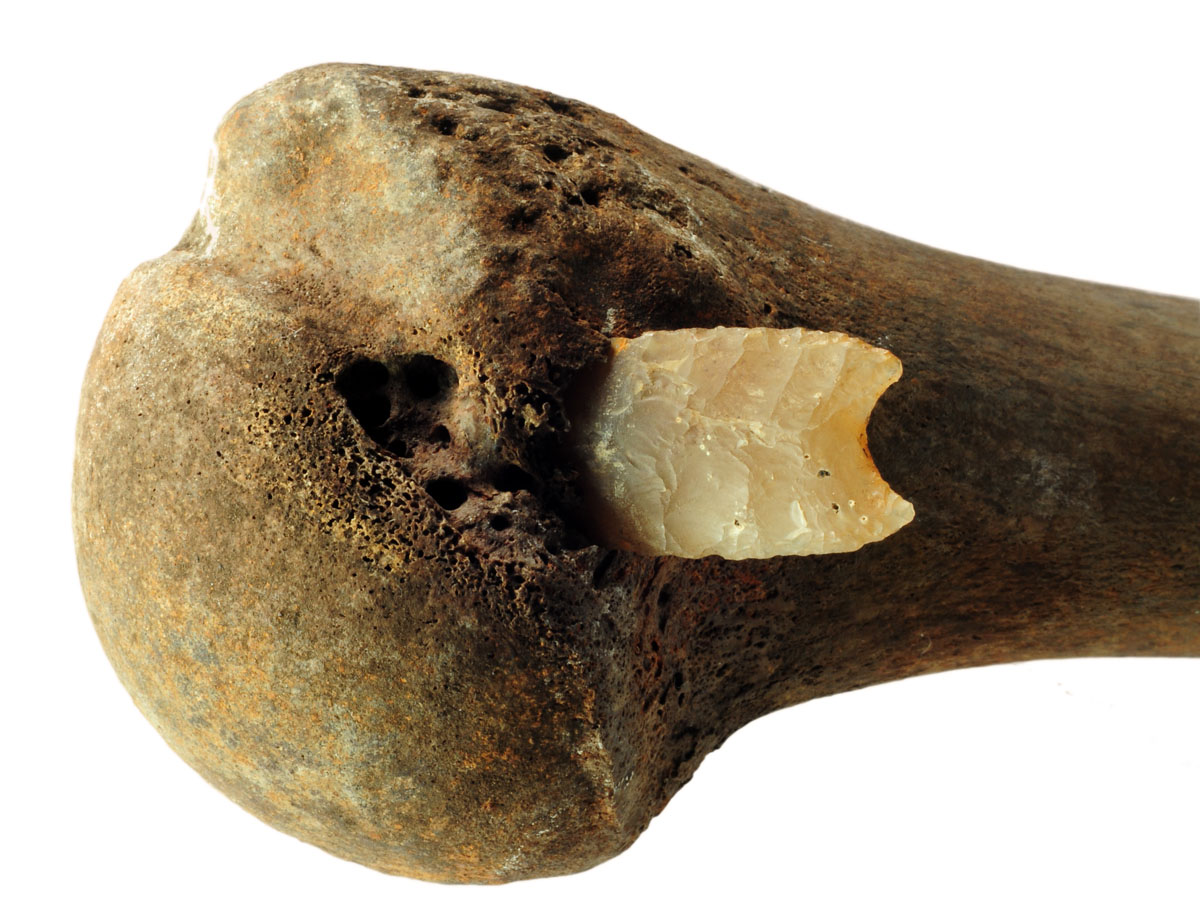
Kość ramienna, od której wszystko się zaczęło...
Foto source


Wiedza jest szalona!
Wiedza w rękach historyka jest nawet szaleńsza niż ta dotycząca inych dziedzin!
Wedle Słownika Języka Polskiego, „szaleńszy” to stopień wyższy od przymiotnika ‘szalony’, co dalej wyjaśnione zostaje „jako taki, który zachowuje się nieobliczalnie i sprawia wrażenie niezrównoważonego”, innymi słowy  rzec można: NIEOKIEŁZNANY.
I za taką mam wiedzę, która z jednej strony szokuje możliwościami, inspiruje i daje coś do podziwiania, a z drugiej strony powiada: tutaj wysiadam, pokombinuj sam... No bo zastanówmy się! Jeśli możemy dzisiaj dowieść, że zaprawieni w bojach na śmierć i życie faceci nie trawili mleka, ale chronologię ich kości, zostawionych na polu bitwy, określamy najwyżej z dokładnością do ćwierćwiecza, to kto mi powie, że mamy do czynienia z wiedzą okiełznaną?

Ale może to i lepiej, że jest taka konfliktogennie-konwulsyjna, oferując w pewnych sprawach laserową precyzję, a w innych po prostu radlaną nieporadność przy odkładaniu skiby z detalami. Osobiście wolałbym raczej żeby skiba temporalna została odłożona z precyzją co do dnia, a nietolerancja laktozy wśród aktorów bitewnego zwarcia sprzed przeszło trzech tysięcy lat pozostała co najwyżej wysoce prawdopodobną hipotezą. Stało się inaczej, co nie oznacza, że źle! Mamy dodatkową porcję wyśrubowanej wiedzy, która dowodzi, że z wyrobów mlecznych, waleczni żarli przed bitwą co najwyżej mozarellę – wszystko inne bowiem, zamiast na pole bitwy, wysłałoby ich zbiorowo do latryny. Tak, tak, laktozy w mozarelli mało, pożywne ci to jest, a i wyrabiana była na Kujawach już na cztery tysiące lat przed meklemburskim happeningiem.
OK, czuję że zaczynam czytelnika gubić...
Wracajcie! Przechodzę do sedna rzeczy.


Miejsce bitwy nad rzeką Tollense

Weltzin, Meklemburgia, Niemcy.
Z centrum Szczecina do Weltzin jest około 115 km – da się zrobić nawet rowerem. Na 26. kilometrze mija się pruski słup całomilowy, skąd już tylko dziewięć kaemów do granicy. Niamcy. Po drodze, w Klempenow, jest jeszcze zamek z XIII wieku, który przez jakiś czas był w posiadaniu książąt dymińskich z rodu Gryfitów, spokrewnionych z Piastami. Miejsce jest stareńkie, omszałe i niejedną legendą stoi. Tym niemniej na głębokie pompowanie wyobraźni w 3D z elementami audio trzeba jeszcze pokonać niewielki kawałek drogi – najlepiej piechotą, wzdłuż rzeczki Tollense.
Pewnego letniego dnia w 1996 roku, tą właśnie rzeką, meandrującą przez idylliczną dolinę, płynał swoim pontonem lokalny archeolog-amator, Ronald Borgwardt. Pokonał kolejny ostry zawijas i zauważył coś sterczącego ze ściany koryta rzeki. Nie zignorował widoku - i na szczęście - bowiem obiektem nagłego zainteresowania okazała się być ramienna kość człowieka z krzemiennym grotem wbitym solidnie w jej głowę. Ronald Borgwardt okazał się być godnym następcą wielu pruskich/niemieckich aktywistów w dziedzinie ochrony zabytków*, gdyż zgłosił znalezisko lokalnym archeologicznym służbom konserwatorskim i rzecz ruszyła z kopyta.
Dzięki temu, mamy dzisiaj do czynienia z wielowątkową sagą sprzed około 3300 lat, która w wyniku badań terenowych i analiz laboratoryjnych odsłania rąbek za rąbkiem elementy swoiej tajemnicy.

Na osi czasu jest rok +/- 1250 przed naszą erą.
W Egipcie rządzi dziewiętnasta dynastia, między innymi Ramzes II z królową Nefertari, stojącą najwyżej spośród jego czterech głównych żon. Wtedy to też zaczyna się egejska wędrówka ludów oraz następuje wyjście Izraelitów z Egiptu do Ziemi Obiecanej. Natomiast w Polsce i okolicach, ludy o nieokreślonym etnosie pławią się w dobrodziejstwach III okresu epoki brązu. Dla lepszego zobrazowania w jakim momencie historii nadwiślańskiej krainy jesteśmy, wyjaśniam że Biskupin powstanie dopiero za 500 lat.
Świetnie, powie ktoś, tylko że takich momentów i znalezisk kości ludzkich mamy w naszych dziejach na pęczki. No tak, z pewnością, ale dolina rzeki Tollense skrywa opowieść wyjatkowo niezwykłą. Nie ma tam żadnych śladów osadnictwa ani cmentarzysk, tak typowych dla tego okresu pradziejów. Mamy natomiast miejsce gdzie z wielkim prawdopodobieństwem naparzało się pół Europy. Innymi słowy, analiza materiałów pozyskanych w trakcie prac wykopaliskowych, wskazuje na to, że nie był to konflikt regionalny dwóch skłóconych społeczności, okupujących przeciwne brzegi rzeki i czerpiących korzyści z „ceł” na brodzie czy nawet moście. Takich społeczności, stale zamieszkujacych bagienne łąki doliny, po prostu tam nie było. Był wszakże rzeczony most, a może raczej drewniano-kamienno-ziemna grobla, która istniała tam już od wieków. Ktoś ją zbudował, reperował i utrzymywał przez pokolenia. Pytaniem zasadniczym jest więc kto i dlaczego tego miejsca bronił, a kto usiłował zdobyć i zapanować nad przeprawą? Hipotez jest wiele i jedno jest pewne – to nie była lokalna bijatyka strażników grobli z grupą cwaniaków, którzy nie zamierzali uiścić myta. Bronioznawcy tego okresu wyraźnie wskazują na starcie Mężnych Zacofanych (eM-Zet) z Progresywnymi Nonszalantami (Pe-eN), co obrazowo parafrazując mogło wyglądać nieco podobnie jak zdarzenie przedstawione tutaj > https://youtu.be/7YyBtMxZgQs, z tą różnicą, że w dolinie leniwie meandrującej rzeczki Tollense stanęło na przeciwko siebie jakieś trzy do siedmiu tysięcy 20-40-latków. Co piąty skończył w rzece albo w bagnie – niektórym droga w objęcia wieczności zajęła nawet kilka dni. Mężni Zacofani przyszli z północy i wydaje się, że reprezentowali w jakimś stopniu lokalną społeczność w szerokim rozumieniu. Było ich wiecej, ale w rękach mieli tylko drewniane maczugi i łuki ze strzałami zakończonymi krzemiennymi grotami – to właśnie jeden z takich tkwił w kości ramieniowej jaką zoczył Borgwardt. Należała bez wątpienia do progresywnego nonszalanta, który być może chwilę wcześniej nadział na swój elegancki miecz z brązu wątrobę i nerki kompana łucznika. Zresztą tak samo nie wiem czy łucznik eM-Zet nie dostał przypadkiem chwilę potem w czaszkę brązowym czekanem od jakiegoś jurnego Pe-eNa z Bawarii lub Bohemii, albo i strzałą zakończoną takimże grotem. Te dwa ostatnie pojęcia geograficzne nie istniały wówczas, ale pozwalają wedle dzisiejszej nomenklatury na kontekst terytorialny w stosunku do istotnej części populacji Pe-eNów. Ponadto, wiele wskazuje na to, że Pe-eNi byli w pewnym sensie zbieraniną zadziornych. Wielu z nich wydaje się być awanturnikami, chętnymi do naparzania się gdziekolwiek na horyzoncie są kasa i łupy. Ot, taka Grupa Wagnera 
sprzed 33 stuleci i im podobni zabijacy z późniejszej Iberii czy Galii. Genetyka, poprzez analizę haplotypów, poszerza wiedzę o uczestnikach starcia, sugerując, że Pe-eNowie mogli być potomkami populacji nawiązującej do społeczeństw późnoneolitycznej kultury pucharów dzwonowatych i kultur odeń pochodnych, w szczególności kultury unietyckiej. Protoplastowie eM-Zetów zaś wywodzili się z parelelnej z „dzwonowcami” kultury ceramiki sznurowej, a ich bitni spadkobiercy genów zaliczali się do ludów tworzących kompleks kultury łużyckiej. Szczątki niektórych poległych w doline rzeki Tollense wykazują powinowactwo z haplogrupą R1a. Nosicieli tego wariantu jest multum wśród ludów słowiańskich, a najwięcj w Polsce(!),gdzie nosi go w swoim chromosomie Y około 60 procent dżentelmenów. Wniosek, z przymrużeniem oka, nasuwa się taki: nasi chwycili za pały i poszli prać się w Meklemburgii – czyżby „furioza” tamtych lat? To na tyle byłoby z panami, a co z paniami? Niektóre poszły za swoimi chłopami nad Tollense. Były nawet takie z dziećmi. O uczestnikach prania wiemy już, że starły się tam dwie odrębne populacje. Pe-eNowie reprezentowali „obcych” z punktu widzenia autora (Polaka), a eM-Zeci bardziej jakby „naszych”. Co ciekawe, wydaje się, że w tym krwawym żniwie panie nie koniecznie tylko kibicowały - nie wiemy wszakże czy prały się po obu stronach. Choć, jeśli miałbym na kogoś stawiać, to powiedziałbym, że to raczej eM-Zetki prały Pe-eNów. Fantazjując nieco bardziej, korci mnie żeby ogłosić tę bitwę Wojną o Północną Helenę. Tak, tak, o Helenę! Przecież to ten sam czas kiedy Odyseusz i 31 innych napalonych na najpiękniejszą przed Kleopatrą kobietę Antyku zebrało się na grzmoty pod Troją. Czyżby awantura nad Tollense miała podobne podłoże? Nie wiem, ale interesującym jest fakt, że bez względu na to czy panie walczyły po jednej czy po obu stronach konfliktu, jedne i drugie mogły nosić w sobie zapis genetyczny klanu Heleny. Nie, nie tej spod Troi, ale jednej spośród siedmiu „pramatek Europy”, której dziedzictwo genetyczne posiada 43% dzisiejszych Polaków (sic!). Fajowo, nie?

Czas na ponurą konkluzję: media właśnie doniosły, że w 249. dniu wojny w Ukrainie zginęło około 950 najeźdźców... w jednym dniu(!)... druga strona oczywiście też poniosła straty...
Pytam zatem z dozą jadu: no to czy w kwestii „prania” nic się 
żesz-ku nie zmieniło na świecie  przez te 3300 lat?

Coś, ktoś?????

___________________________________
* metody postępowania w tym zakresie poznałem źródłowo podczas moich badań archiwalnych dokumentacji archeologicznej z lat 1850-1945, obejmującej Środkowe Nadodrze i przechowywanej po wojnie w poczdamskim archiwum; system ten, oparty na świadomości i czujności lokalnych fanatyków prahistorii, przetrwał jak widać do dzisiaj i ma się dobrze.


 8 / 23 / 2022

BZIK
I’d  Rather Go  Blind
Oraz  krótka  historia  Etty  James


For English version, please scroll down


Etta James


Nie wiem jak to powiedzieć..., no, nie, nieprawda, już wiem.

Zacznę od definicji
Słownik języka polskiego PWN: bzik, lekki obłęd lub dziwactwo
Dobrysłownik.pl: bzik, to nieco potocznie lekki obłęd, mania lub dziwactwo;
synonimicznie: fioł, fiś, hopel, hyś, jobel, świr, zajob, dziwactwo, feblik, inklinacja, konik, mania, obłąkanie, obłęd, paranoja, pasja, pociąg, predyspozycja, skłonność, szaleństwo, upodobanie, wariactwo, zamiłowanie, żyłka;
książkowo: predylekcja

Zgadzam się na predylekcję, ale przysięgam, że nikomu nic nie zrobię jak powie, że mam bzika na punkcie tej piosenki. Bo mam! Tym niemniej, za hysia, feblik i jobla walę sierpowym w podbródek.

Moim "bzikiem" stał się utwór zatytuowany I’d Rather Go Blind, który usłyszałem po raz pierwszy kilka lat temu w wykonaniu Beth Hart (2015, Amsterdam). Wtedy, dokładnie wtedy, dostałem go, to znaczy, tego bzika. Zaraz zacząłem szukać innych wykonań tego utworu przez Beth Hart i jeszcze bardziej „zbzikowałem” na punkcie tego pierwszego – linki do tych kilku innych jej wykonań, wcześniejszych i późniejszych, zamieszczam poniżej. Moim zdaniem, żaden nie dorównuje temu amsterdamskiemu, ale kto wie, może komuś spodoba się bardziej właśnie wykonanie na leżąco w bordowej sukience... 

Bzik ma to do siebie, że wedle cytowanego Słownika PWN, oznaczać może „dziwactwo” – OK, niech będzie! A więc zdziwaczałem tak dalece, że postanowiłem poszukać źródeł tego utworu. Na szczęście, dzisiaj jest to prostsze niż przysłowiowa budowa cepa. Papa / Guru / Wszechwiedzący Google, sprawdził się donosząc mi co natępuje (bez cytatu). Otóż, w 1967 toku niejaka Etta James odwiedziła w więzieniu swojego przyjaciela, piosenkarza i kompozytora z Detroit, Ellingtona "Fugi" Jordana, który naszkicował jej pomysł piosenki na gruncie swoich doświadczeń więziennych. Etta łyknęła bakcyla i razem z nim dopracowała rzecz tak, że jeszcze tego samego roku utwór pod tytułem „I’d Rather go Blind” znalazł się na stronie B jej singla „Tell Mama”. Singiel zanotował pozycję numer 10 na najbardziej popularnym rankingu Hot R&B/Hip-Hop Songs i pozycję nr 23 na liście Hot 100, komponowanej przez tygodnik Billboard. Wykonanie angielskiego zespołu Chicken Shack w 1969 roku zanotowało pozycję czternastą na brytyjskiej liście przebojów. Ich ówczesna liderka, Christine Perfect, później znanna jako Christien McVie nagrała swoją wersję w albumie I'm Too Far Gone (To Turn Around), wydanym ponownie w roku 1976, jako The Legendary Christine Perfect Album.
Oryginalny współtwórca utworu, Ellington Jordan, przedstawił w 1969 roku swoją wersję pod tytułem „I’d Rather be a Blind Man”. Potem przyszły wykonania mniej i bardziej amatorskie oraz profesjonalne, wiele z nich na wysokim poziomie artystycznym. Wtedy to utwór ten zaczął żyć własnym życiem. Życiem spełnionym w niezliczonej ilości wykonań i wersji, stając się wyznaniem uwielbienia i miłości, takiej niezniszczalnej, nieśmiertelnej.

Zatem, zapytajmy kim była Etta James, której przyszło współtworzyć dzieło nieśmiertelne w swojej wymowie?

Ano była dziewczyną znikąd. Tak po prostu, znikąd! Podaję z moimi uzupłnieniami za angielską wersją jej życiorysu na portalu SongFacts.


Jamesetta Hawkins (po wydaniu pierwszej płyty jako Etta James)
urodziła się 14-letniej Dorothy Hawkins w 1938 roku w Los Angeles. O ojcu w zasadzie nigdy do końca się nie dowiedziała – podejrzewała, że był to zawodowy gracz w bilarda, Rudolf Walter Wanderone, którego spotkała jeden raz, w 1987 roku. Matka umieściła ją w domu zastępczym, a kilkadziesiąt lat później Etta powiedziała, że ​​była to najlepsza decyzja jaką mogłą podjąć. W 1994 roku w wywiadzie dla Fresh Air NPR, mówiąc o matce, stwierdziła: „Była dzieckiem, więc co miała ze mną zrobiłć? Czy śpiewałbym dzisiaj? Czy byłabym kimkolwiek?” Skądinąd wiadomo, że matka była obecna w jej życiu, ale przez długie lata bez porywów. Dorota Hawkins zobaczyła Ettę na scenie pierwszy raz podczas jej występu w Hollywood Bowl w 1999 roku, kiedy jej córka była 61-letnią artystką mega klasy. Będąc dzieckiem wielu zastępczych rodzin, młoda Jamesetta nazywała matkę „tajemniczą panią”.

Jako pięciolatka zaczęła śpiewać w chórze Kościoła Baptystów p.w. Św. Pawła w Los Angeles. Dyrektor chóru grzmocił małą Jamsettę w klatkę piersiową żeby nauczyła się wydobywać głos „spod wątroby, z kiszek”, co o dziwo zaowocowało wkrótce niezwykle silnym głosem jak na tak małe dziecko. W domu nie miała lepiej... jej zastępczy „tatuś”, będac często w pianym widzie, zrywał dziewczę ze snu nad ranem i kazał jej śpiewać swoim napitym, pokerowym kolesiom. Rezultatem tego była silna awersja dorosłej Etty do śpiewania na zawołanie – ponoć często w takich sytuacjach czuła się zablokowana i nie mogła wydobyć z siebie głosu.

Jej formalna kariera rozpoczęła się w San Francisco. Kiedy w 1950 roku zmarła w Los Angeles zastępcza opiekunka Jamesetty, dwunastolatka trafiła w objęcia biologicznej matki, którą ledwie znała. Mieszkały podle, a szkoła była pogłębieniem problemów dorastającej młódki – natomiast śpiew był dla niej zawsze jak przysłowiowa „jazda bez trzymanki”. Mając 14 lat poznała Johnny'ego Otisa, uważanego przez wielu za jednego z ojców R&B, a wkrótce potem siostry Jean and Abysinia Mitchell z którymi sformowała grupę doo-wop o nazwie Creolettes. W wieku niespełna 16 lat wzięła udział w przesłuchaniu, po którym Otis zaprosił Jamesettę i Creolets do Los Angeles, aby zrobić nagranie. Warunkiem, ze względu na małoletniość Jamesetty i jednej z sióstr Mitchell, było dostarczenie mu podpisanego listu od matki, wyrażającego zgodę na takie przedsięwzięcie. Jamesetta sama napisała notatkę i pojechała do Los Angeles, gdzie nagrała utwór „Roll with Me, Henry”, po czym ona i Creoletes zostały dołączone do wędrownej grupy R&B Otisa i wytwórni Modern Records. Sukces zdopingował Otisa do przepisania Jamesetty na Ettę James, a Creoletes na Peaches, ale to nie był koniec zmian. Sugestywny w wymowie tytuł trzeba było zmienić na „Wallflower”, ale treść pozostała ta sama.

Kilka lat później Etta James została pierwszą damą Chess Records, bluesowej wytwórni płytowej założonej w Chicago przez braci Leonarda i Filipa Chess, którzy przed przybyciem w 1928 roku do Nowego Jorku, nazywali się odpowiednio, Lejzor Szmuel Czyż i Fiszel Czyż. Urodzili się w Motolu, mieście królewskim, założonym kilka kilometrów na zachód of Pińska przez Bonę Sforzę w roku 1554.

Wiele największych przebojów Etty James pochodzi z czasów współpracy z wytwórnią Chess, w tym „All I Could Do Was Cry” i album At Last, którego tytułowy utwór stał się jej popisową piosenką. W 2009 roku Beyoncé Knowles zaśpiewała „At Last” na balu inauguracyjnym dla prezydenta Baracka Obamy, co skłoniło James do powiedzenia, że ​​nienawidzi zarówno Knowles, jak i jej wersji piosenki. Później Etta stwierdziła, że tylko żartowała, ale przyznała, że przykro jej było, gdy ​​nie została zaproszona sama do zaśpiewania tego przeboju. Beyoncé wcieliła się w postać Etty James w filmie „Cadillac Records” z 2008 roku, opisującym wzloty i upadki wytwórni Chess.

Trwające całe życie zmagania z nadużywaniem narkotyków sprawiy, że w latach 1978-1989 Etta była rzadko spotykana na scenie muzycznej. W tym czasie nagrała zaledwie jeden album, zatytułowany Seven Year Itch (1988). O swoich próbach pokonania uzależnienia od narkotyków mawiała: „rzucałam to wielokrotnie”. Podczas odwyku, w połowie lat 70. Keith Richards z Rolling Stones napisał do niej list. Obiecał w nim Ettcie miejsce na otwarcie ich występu, jak tylko będzie gotowa. Wdzięczna Etta James koncertowała z legendarnym zespołem rockowym w 1978 roku i wystąpiła wówczas na
 Rising Sun Festijazz, pierwszym blues & jazz festiwalu w Montrealu - dzisiaj największej tego typu imprezie jazzowej w świecie.

W 1993 roku jej nazwisko znalazło się w Rock and Roll Hall of Fame, a w 1994 roku zdobyła swoją pierwszą nagrodę Grammy w kategorii Best Jazz Vocal Performance za album Mystery Lady: Songs of Billie Holiday. W 2003 roku otrzymała nagrodę Grammy Lifetime Achievement Award. Rok później Rolling Stone umieścił ją na liście 100 najlepszych piosenkarzy wszechczasów. Kolejną nagrodę Grammy, w kategorii Best Contemporary Blues Album, otrzymała w 2005 roku za Let's Roll. Było to ostatnie nagranie Etty James. Ogółem zdobyła sześć nagród Grammy i 17 nagród Blues Music Awards. Oprócz Rock & Roll Hall of Fame, jej nazwisko upamiętnione zostało w 2001 roku także w Blues Hall of Fame, a w latach 1999 i 2008 w Grammy Hall of Fame.

W 2008 roku zdiagnozowano u niej chorobę Alzheimera, a w 2011 białaczkę i demencję. Etta James zmarła 20 stycznia 2012 roku. Stevie Wonder i Christina Aguilera oddali jej hołd na pogrzebie, śpiewając największe z jej przebojów. Wielebny Al Sharpton przewodniczył nabożeństwu i przeczytał notatkę od prezydenta Obamy – powiedział on, że Etta James zostanie zapamiętana ze względu na jej głos i muzykę, która przenika gatunki.” (odnotowano w Polsce: https://www.fakt.pl/plotki/pogrzeb-slynnej-amerykanskiej-piosenkarki-foto/ln5wlr2 )

Kończąc, załączam skromną listę wykonań przedmiotowej piosenki, z tą na początku, która dla mnie w swojej wymowie artystycznej dorównuje oryginałowi. Jest to nagranie z początków lutego 2012 roku, podczas jednej z prób grupy Playing For Change, przygotowującej w Los Angeles koncert dedykowany pamięci Etty James...

śpiewają: Clarence Bekker and Titi Tsira  


Inne wykonania, wybór:

https://youtu.be/cSzCia74Y8A - Beth Hart – I’d rather go blind (Olympia 2020) 
https://youtu.be/BeK9m4y73HY - Beth Hart
https://youtu.be/qk8xMfl6n9g  - Jeff Beck & Beth Hart
https://youtu.be/JtnuSNPsbvE  - Beth Hart w Pradze, 7 czerwca, 2022 
https://youtu.be/fALdOkf_eCM - Beth Hart & Jeff Beck (Kennedy Center Honors 2012)

https://youtu.be/uZt1xKtPbUQ - Etta James, Montreux 1975
https://youtu.be/74dUAKed6l8 - Etta James & Dr. John 1987 
https://youtu.be/I5XQtZclM2w - Etta James 17 sierpnia, 1991 - Newport Jazz Festival
https://youtu.be/zUcSQtgMmzQ - Etta James - original 1967 Singel CADAT, Side B

https://youtu.be/jZVQD9piv7A - Beyoncé / Adrien Brody (Cadillac Records)

https://youtu.be/nzsS59OgAY4 - Rod Stewart - Ceasars Palace 13 maja, 2022
https://youtu.be/26_kBUC7fCI - Rod Stewart 1974
https://youtu.be/mFElMEMTPtI - Rod Stewart & Carlos Santana, Jones Beach 20 sierpnia, 2014
https://youtu.be/Rjz7CdHKPlk - Rod Stewart w/The Faces - Edmonton, 4 czerwca,1973

https://youtu.be/-Jpl4D1kx3I  -- Kaz Hawkins, Styczeń 29, 2022

https://youtu.be/4zo01RMOGNI - Gov't Mule with Maggie Koerner & Trombone Shorty - @ Saenger Theater

https://youtu.be/2wK1F7yM0T8 - Rachel Crow

https://youtu.be/q9v7RmBRL2A - Playing For Change Band w Byron Bay Australia, 2013 Tour 

https://youtu.be/auBkZPjzY3U - Tennessee Whiskey mashup Erin Kirby and Kurt Lee Wheeler 4 września 2019

https://youtu.be/lk-pL6FVmss - Danielle Nicole Band - Tennessee Whiskey" - Knuckleheads - 22 listopada 2017

https://youtu.be/DasmGoMIppk - Tennessee Whiskey, Chris Stapleton/Etta James (Cover by Soulroot) version

https://youtu.be/_elmd7eaPYQ - Gov't Mule - (Etta James Cover) feat. Special Guests - Mountain Jam 2013

Oryginlne nagranie raz jeszcze  https://youtu.be/lcRz1THSU60  --- słuchajcie...

... a jak znajdziecie coś innego do zbzikowania, to polecam się do kompanii... i z góry dziękuję...

>>>>>>>>>>>>>>>>>>>>>>>><<<<<<<<<<<<<<<<<<<<<<<<<
CRAZE
I’d Rather Go Blind
A Short Story of Etta James


I don't know how to say it ... no, no, it's a lie, I know.


Let me start with the definition of "craze"
PWN Polish Dictionary: slight insanity or weirdness
Dobrysłownik.pl: crazy, colloquially a bit of madness, mania or weirdness;
synonymously: freak, weirdness, inclination, mania, madness, insanity, paranoia, passion, predisposition, inclination, madness, liking, love;
book-like: predilection

I agree with predilection, but I swear that I will not do anything to anyone if they say that I am crazy about this song. Because I am! However, for hyś, feblik and jobel, you get a hook punch to the chin.

My "craze" is about a piece called  I'd Rather Go Blind , which I heard for the first time performed by Beth Hart (2015, Amsterdam a few years ago). Then, I got it instantly, I mean, my "craze". I started looking for other performances of Beth Hart and I freaked out even more about the first one - links to several of her other performances, earlier and later, are provided below. In my opinion, none can match the Amsterdam one, but who knows, maybe someone will like it better performed in a burgundy dress while lying down on the stage ... 

"Crazy", according to the quoted PWN Dictionary can mean "quirk" - OK, let it be quirk, but for "madness", even a slight one, I do not agree. Yes, I  became so crazed about this hit  that I decided to look for its source.  Fortunately, today it is simpler than the proverbial construction of a flail. Papa Google has proven itself fully and reported as follows (not a quote). In 1967 a certain Etta James visited in prison Ellington "Fugue" Jordan, a friend, singer and composer from Detroit, who sketched for her the idea of a song based on his prison experiences. Etta took the bug and worked it out with him to the point that the same year the song "I'd Rather go Blind" was on the B side of her single "Tell Mama". The single reached number 10 on the most popular Hot R&B / Hip-Hop Songs and number 23 on the Billboard Hot 100 . The English band Chicken Shack's version hit number four in 1969 on the British charts. Their leader at the time, Christine Perfect, later known as Christien McVie, recorded her version for the album I'm Too Far Gone (To Turn Around) , re-released it in 1976 as  The Legendary Christine Perfect Album.
The original co-creator of the song, Ellington Jordan, presented his version in 1969 entitled "I'd Rather be a Blind Man". Then came a slew of amateur and professional performances, many of them at the highest level, and that's when this piece began to live its own life, a life fulfilled in countless performances and versions. In this context, it became a profession of adoration and love, quite indestructible and immortal.

So, let's ask who was Etta James who co-created this profoundly immortal work? 

Well, she was a girl out of nowhere. Just like that, out of nowhere! I am enclosing a version of her curriculum vitae from SongFacts with my additions.

Jamesetta Hawkins (after her first album as Etta James) was born to 14-year-old Dorothy Hawkins in 1938 in Los Angeles. She basically never found out about her father - she suspected that he was a professional billiard player, Rudolf Walter Wanderone, whom she met once in 1987. Her mother placed her in a foster home, and decades later, Etta said it was the best decision she could have made. In a 1994 interview with Fresh Air NPR, speaking of her mother, she stated: “She was a child, so what was she supposed to do with me? Would I sing today? Would I be anyone? " It is known that the mother was present in her life, but for many years without any stronger influence. Dorothy Hawkins saw Etta on stage for the first time during her performance at the Hollywood Bowl in 1999, when her daughter was a 61-year-old mega-class artist.

At the age of five, she began singing in the choir of the St. Paul in Los Angeles. The choir director banged little Jamsetta in the chest to let her learn how to make her voice "from under the liver; from the intestines", which surprisingly soon resulted in an unusually strong voice for such a small child. At home, she had no better ... her surrogate "daddy", when he was full of booze, roused the girl from sleep in the wee hours of the morning and made her sing to his drunk poker guys. The result was a strong aversion of adult Etta to singing on demand - apparently in such situations she often felt blocked and could not speak.

Her formal career began in San Francisco. When Jamesetta's foster mather died in Los Angeles in 1950, the twelve-year-old was embraced by a biological mother she barely knew. They lived poorly, and the school deepened the problems of the adolescent youngster.  Only singing was always for her like riding a bike without holding the handlebar.  At the age of 14 she met Johnny Otis, considered by many to be one of the fathers of R&B, and shortly thereafter the sisters Jean and Abysinia Mitchell with whom she formed  the doo-wop group called Creolettes. At the age of just under 16, she auditioned for Otis who invited Jamesetta and the Creolets to Los Angeles for recording a song. Due to the minority of Jamesetta and one of the Mitchell sisters, he requester a signed letter from her mother expressing consent to such an undertaking. Jamesetta wrote the note herself and traveled to Los Angeles, where she recorded the song "Roll with Me, Henry", after which she and Creoletes joined Otis' traveling R&B group and the Modern Records. Success prompted Otis to rename Jamesetta as Etta James and Creoletes as Peaches, but that was not the end of the changes. The title of the song, too evocative in its connotation had to be changed to "Wallflower", but the content remained the same.

A few years later, Etta James became the first lady of Chess Records, a blues record label founded in Chicago by brothers Leonard and Filip Chess, who, before arriving in New York in 1928, were called Lejzor Szmuel Czyż and Fiszel Czyż, respectively. They were born in Motal (then Poland, today Belarus), a royal city founded in 1554 by Polish Queen Bona Sforza a few kilometers west of Pinsk.

Many of Etta James' greatest hits date back to her collaboration with the Chess label, including "All I Could Do Was Cry" and the album At Last, the title track of which became her signature song. In 2009, Beyoncé Knowles sang "At Last" during the inaugural ball for President Barack Obama, prompting James to say that she hated both Knowles and her version of the song. Etta stated later that she was only joking, but admitted she felt sorry for not being invited to sing the hit herself. Beyoncé played Etta James in the 2008 film "Cadillac Records", which covered the highs and lows of the Chess Records company.

Her lifelong struggle with drug abuse made her hardly visible on the music scenes between 1978 and 1989. At that time, she recorded only one album, entitled Seven Year Itch (1988). About her attempts to overcome drug addiction, she said: "I quit it many times." In the mid-1970s, during the rehab, Keith Richards of the Rolling Stones wrote a letter to her, in which he promised Ettta a place to open their show as soon as she was ready. Grateful Etta James toured then with the legendary rock band in 1978 and performed at  Rising Sun Festijazz, the first blues & jazz festival in Montreal - today the largest jazz event of its kind in the world.

In 1993, her name was included in the  Rock and Roll Hall of Fame, and in 1994, she won her first Grammy Award for Best Jazz Vocal Performance for the album  Mystery Lady: Songs of Billie Holiday. In 2003, she received the Grammy Lifetime Achievement Award. A year later, the Rolling Stone magazine included her on the list of the 100 Greatest Singers of All Time. She received another Grammy Award for Best Contemporary Blues Album in 2005 for  Let's Roll. It was the last recording of Etta James. Overall, she has won six Grammy Awards and 17 Blues Music Awards. In addition to the Rock & Roll Hall of Fame, her name was commemorated in 2001 in the Blues Hall of Fame, and in 1999 and 2008 in the Grammy Hall of Fame.

In 2008 she was diagnosed with Alzheimer's disease, and in 2011, she was diagnosed with leukemia and dementia. Etta James died on January 20, 2012. Stevie Wonder and Christina Aguilera paid tribute to her at the funeral by singing her greatest hits. The Reverend Al Sharpton presided over the service and read a note from President Obama - he said that Etta James would be remembered for her voice and music that permeates genres. 

Above I enclosed a modest list of performances of the song in question, beginning with one that is on par with the original in its artistic expression, at least for me. This is a recording from the beginning of February 2012, when the group Playing For Change, was rehearsing for a concert in Los Angeles dedicated to the memory of Etta James ...

 12 / 8 / 2026 POLSZCZYZNA Język polski jest ponoć jednym z najtrudniejszych języków na świecie. Najdobitniejszym dowodem na to wydaje mi si...